Close the Gap and Get Back to Smiling Comfortably
A missing tooth changes more than your smile. It can make chewing harder, leave your gums exposed, and allow neighboring teeth to drift out of place. At Ponte Vedra Dental Group in Ponte Vedra Beach, FL , we use dental bridges to replace one or more missing teeth so your smile looks natural and works the way it should. During your exam, we’ll talk through whether a bridge is the right fit for you.
book onlineHow a Dental Bridge Restores Your Smile
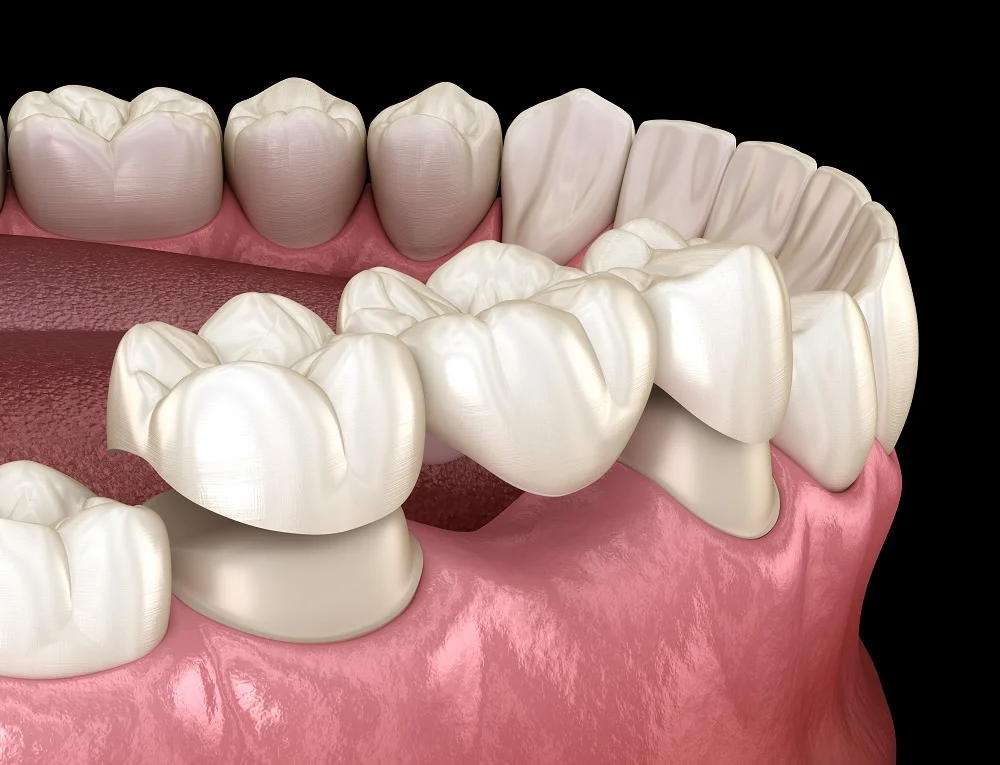
A dental bridge is a custom-made restoration that fills the space left by a missing tooth. It is made up of one or more artificial teeth, called pontics, held in place by crowns on the teeth or implants on either side of the gap. Because it is fixed in place, a bridge feels and functions much like your natural teeth.
Benefits of Replacing Missing Teeth with a Bridge
- Restores your ability to bite and chew comfortably
- Fills the gap so your smile looks complete and natural
- Helps keep neighboring teeth from shifting into the empty space
- Helps protect gum tissue that would otherwise be left exposed
- Supports clear speech, which can change when teeth are missing
- Offers a fixed, non-removable solution that is shaped and shaded to blend with your teeth
Types of Dental Bridges
The right design depends on where the missing tooth is, the health of the teeth around it, and your goals. Common options include:
- Traditional bridges, which use crowns on the teeth on both sides of the gap to hold the replacement tooth
- Cantilever bridges, which are anchored to a tooth on only one side of the gap
- Bonded (Maryland) bridges, which use a framework bonded to the backs of neighboring teeth
- Implant-supported bridges, which are anchored by dental implants rather than natural teeth
If you’re considering an implant-based approach, you can learn more about our dental implants. We’ll review each option during your visit and recommend what suits your mouth best.
What to Expect During Treatment
- Exam and consultation: We evaluate the missing tooth area, the surrounding teeth and your gum health, and talk through your options.
- Preparation: If your bridge relies on neighboring teeth, they are gently reshaped so crowns can fit over them.
- Impressions or scans: Detailed records of your teeth are used to create a bridge that fits precisely and matches your smile.
- Temporary bridge: In many cases, a temporary restoration protects the area while your permanent bridge is made.
- Final placement: Your bridge is checked for fit, bite and appearance, then secured in place.
Caring for Your Bridge
With good habits, a bridge can serve you well for many years. Brush twice a day, clean under the bridge with floss threaders or a water flosser, and keep up with regular cleanings and exams so we can check the bridge and the teeth that support it.
Dental Bridge Questions, Answered
What is a dental bridge?
A dental bridge is a fixed restoration that replaces one or more missing teeth. Artificial teeth are held in place by crowns or implants on either side of the gap, so the space is filled and your smile looks complete.
Am I a good candidate for a dental bridge?
Good candidates typically have healthy gums and strong teeth or sufficient bone to support the bridge. We’ll examine your mouth and talk through your goals during your visit to decide whether a bridge or another option is the best fit.
How long does a dental bridge last?
Many bridges last a decade or longer with proper care. How long yours lasts depends on your oral hygiene, your habits, and the health of the teeth and gums that support it.
Is getting a dental bridge painful?
Treatment is performed with local anesthetic, so you should be comfortable during the procedure. Some sensitivity or soreness can follow while you adjust to the new restoration, and it usually fades within a short time.
How do I clean and care for my bridge?
Brush twice daily and clean beneath the pontic every day using floss threaders, interdental brushes or a water flosser. Regular dental checkups help us catch problems early and keep your bridge and surrounding teeth healthy.
What is the difference between a bridge and a dental implant?
A bridge relies on the teeth or implants next to the gap for support, while a single dental implant replaces the tooth and its root without involving neighboring teeth. We can walk you through both so you can choose the option that fits your needs and budget.
Can I eat normally with a dental bridge?
Yes. Once you have adjusted to your bridge, you can enjoy most of your usual foods. We may suggest avoiding very hard or sticky foods to protect the restoration.
Ready to Fill the Gap in Your Smile?
Call (904) 273-8881 or request a visit online to find out whether a dental bridge is right for you. We’re happy to answer your questions and help you plan your next step.